Mediterranean Photo and Glazed Ceramic Mosaic Posters
0
0
0
0
Prompt
Prompt (English)
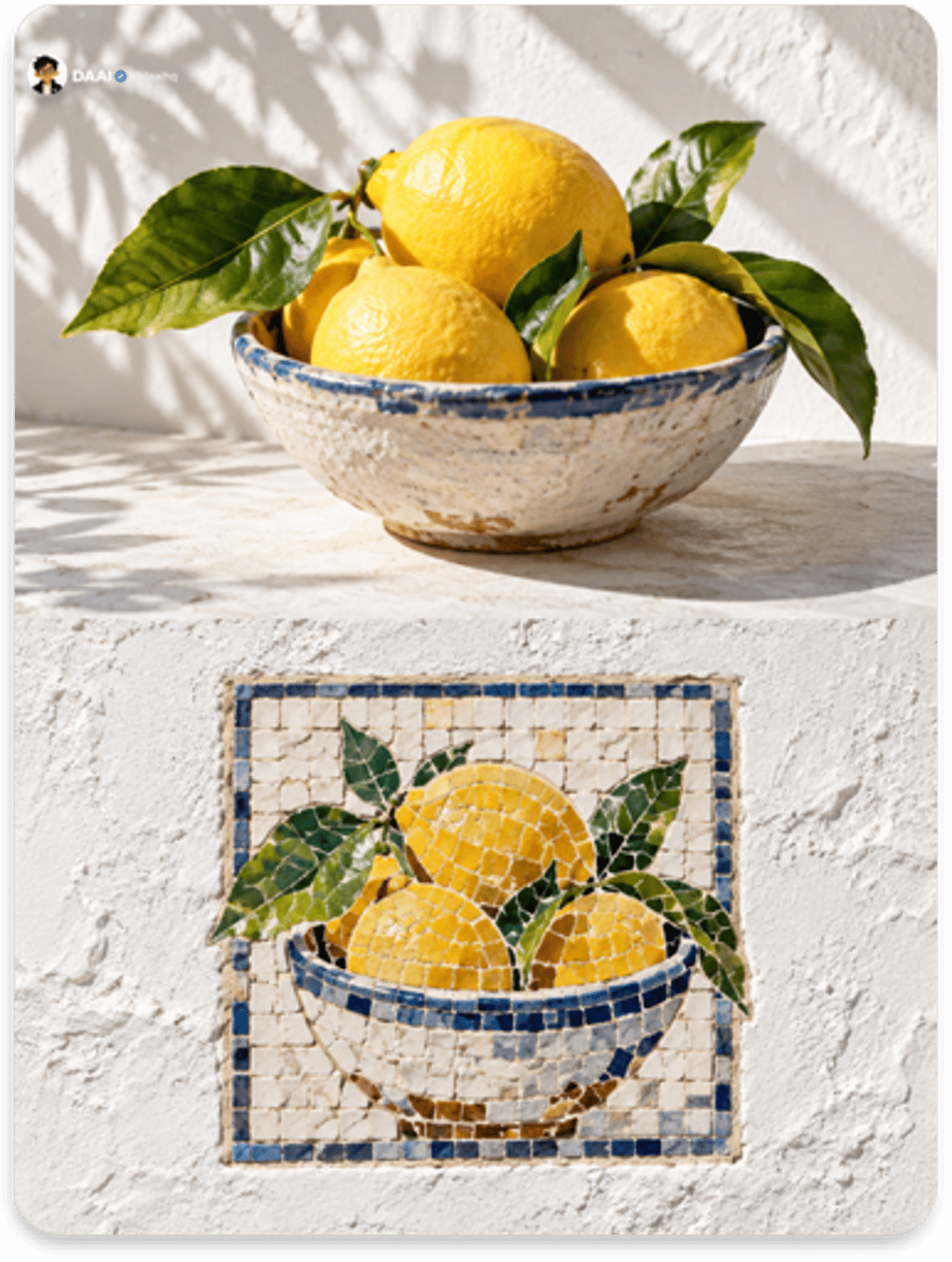
Please turn each photograph I upload into a separate, independent high-end design poster. Do not combine multiple photographs into a collage; output each photograph separately. Use an overall 3:4 vertical composition, with the upper and lower regions in a strict 1:1 height ratio, each occupying 50% of the image.

In the upper half, retain the original photograph, preserving the subject's identity, structure, pose, realistic texture, natural light and shadow, and original color atmosphere. Apply only subtle, sophisticated color grading for the feel of an art magazine or exhibition image. To fit the frame, the surrounding background may be extended naturally, but do not stretch, distort, or alter the subject.

In the lower half, extract the photograph's most recognizable **subject, contours, structure, and color relationships**, and reconstruct them as a **handmade glazed ceramic mosaic panel / glazed ceramic mosaic**. Assemble the subject from small square or irregular ceramic pieces with slight variations in size. Let the contours rise and fall naturally along the direction of the tiles, combining the simplification of pixels with the warmth of hand cutting. Keep details minimal, using color blocks and key contours to make the original object instantly recognizable.

The mosaic's “pixels” are not an absolutely regular grid, but an arrangement with handmade imperfections: slightly varying gaps between tiles, chipped cut edges, and local changes in direction to follow the contours. The background may use pale tiles or simply retain the white grout base, making the subject resemble a small emblem embedded in a wall.

Emphasize authentic glazed ceramic materials: the glaze's sheen and tiny bubbles, variations in color depth from kiln firing, matte grout with fine grains of sand, and differences in reflected light caused by slightly uneven tile surfaces. Avoid flat digital pixel coloring, a video-game style, and the plastic sheen of 3D rendering.

Build the composition around **one small square or arched panel + extensive negative space**. The panel should occupy only about 35%–40% of the lower half. It may be off-center or partly outside the frame, as if embedded in a quiet white plaster wall that retains authentic plaster texture and soft light and shadow.

Extract 4–6 of the most vibrant colors from the photograph above and translate them into glaze colors: cobalt blue, turquoise green, ochre orange, lemon yellow, terracotta red, creamy white, and so on, varying naturally with the original image—bright, pure, and clear like the Mediterranean.

Use text sparingly. Like a ceramic street address plaque in the Mediterranean, spell out a short word or a number using mosaic tiles or hand-painted glazed lettering, embedded below or beside the panel, with no restriction on language.

The overall visual should combine **glazed mosaic, hand-cut pieces, a grout grid, Mediterranean sunlight, and extensive negative space**. The core principle is: pixels are not an invention of the digital age; they have always been on the wall. Avoid a digital pixel-art style, edge-to-edge mosaic, a cheap decorative feel, excessive symmetry, cartoonishness, and formulaic posters.
Prompt (Chinese)
请将我上传的每一张照片分别制作成一张独立的高级设计海报,不多图拼接,每张照片单独输出。整体采用 3:4 竖版构图,上下两个区域高度严格 1:1,各占画面 50%。

上半部分保留原始照片,保持主体身份、结构、姿态、真实质感、自然光影与原有色彩氛围,仅进行轻微高级调色,使其具有艺术杂志与展览图像质感。为适配画幅,可自然扩展环境背景,但不得拉伸、扭曲或改变主体。

下半部分提取照片中最具识别性的**主体、轮廓、结构与色彩关系**,重构为一块**手工釉面马赛克嵌板 / glazed ceramic mosaic**。主体由大小略有差异的方形或不规则小瓷片拼合而成,轮廓沿着瓷片的走向自然起伏,既有像素的概括性,又有手工切割的温度。细节极简,依靠颜色块和关键轮廓让人一眼认出原物。

马赛克的“像素”不是绝对整齐的网格,而是带有手工误差的排列:瓷片间距略有变化、边缘有切割崩口、局部为了顺应轮廓而改变方向。背景区域可使用浅色瓷片或直接保留白色灰缝底,让主体更像一枚镶嵌在墙上的小徽记。

材质强调真实釉面陶瓷:釉面的光泽与微小气泡、颜色的深浅窑变、灰缝的哑光与细小砂粒、瓷片表面不完全平整造成的光反射差异。避免数码像素平涂、游戏风格、3D 渲染的塑料光泽。

构图以**一块小尺度方形或拱形嵌板 + 大面积留白**为核心,嵌板只占下半部分约35%–40%,可偏心或局部出画,像被嵌在一面安静的白色灰泥墙上,墙面保留真实的灰泥肌理与柔和光影。

配色从上方照片中提取 4–6 种最有生命力的颜色,转化为釉色:钴蓝、松石绿、赭橙、柠檬黄、陶土红、奶白等随原图自然变化,明亮、纯净、地中海般清透。

文字少量介入,可以像地中海街头的瓷砖门牌,用马赛克或手绘釉字拼出一个短词或一个数字,嵌在嵌板下方或旁边,不限制语种。

整体呈现**釉面马赛克、手工切片、灰缝网格、地中海阳光与大量留白**共同构成的视觉。核心原则是:像素不是数字时代的发明,它一直都在墙上。避免数码像素风、满版马赛克、廉价装饰感、过度对称、卡通感和模板化海报。
Parameters
3:4
○○○○○
—
—
—
Comments
to join the conversation