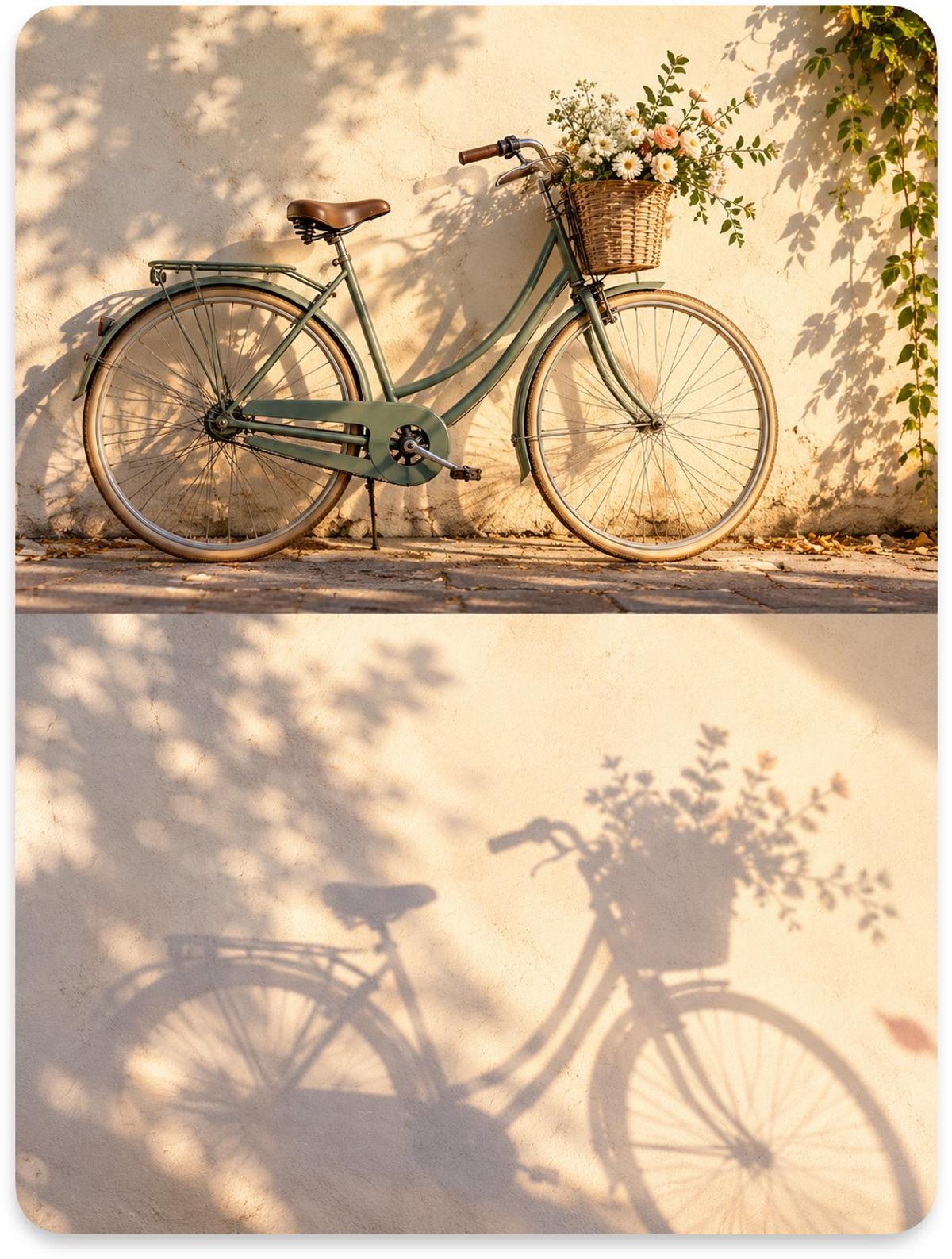
Afternoon Shadows on a Quiet White Wall
0
0
0
0
Prompt
Prompt (English)
Turn each photo I upload into its own independent, sophisticated design poster. Do not combine multiple photos; output each photo separately. Use an overall 3:4 portrait composition. The upper and lower regions must have a strict 1:1 height ratio, each occupying 50% of the image.

Retain the original photo in the upper half, preserving the subject's identity, structure, pose, realistic texture, natural lighting and shadows, and original color atmosphere. Apply only subtle, refined color grading for an art-photography and independent-publication feel. To fit the frame, you may naturally extend the surrounding background, but must not stretch, distort, or alter the subject.

Do not show any physical subject in the lower half. Show only **the subject's shadow cast by afternoon sunlight onto a quiet white wall or pale sheet of paper**. Extract the photo's most recognizable silhouette, pose, structural direction, and narrative relationships, and transform them into an elongated, slightly distorted projection with soft edges, so viewers can immediately recognize the object in the upper photo from its shadow alone. This is a reverse reconstruction that **draws only the shadow, never the object**.

You may layer a small amount of natural light and shadow into the shadow, such as sunlight filtering through leaves (komorebi), diagonal shadows from window grids, soft light through sheer curtains, or wavering light reflected from water. Interweave the subject's shadow with the environment's light, like an everyday miracle glimpsed by chance. You may retain one tiny "displaced detail" in the shadow—a slight difference from the original object, such as an extra flower, a missing part, or a subtly changed pose—to create quiet poetry and a knowing smile.

Emphasize the texture of real light-and-shadow photography: subtle white-wall or paper grain, dust-like particles of light, soft penumbral transitions, and naturally blurred edges of patches of light. The shadow is not a solid-black silhouette; it is translucent gray-violet, gray-blue, or warm gray carrying the surrounding colors. Avoid a digital-composite feel, cut-and-paste effects, and hard-edged vector shadows.

Base the composition on **large areas of bright negative space**. The shadow may sit off-center, extend diagonally, or partly leave the frame. Scatter patches of light sparsely through the negative space to create rhythm. Retain only one wall, one beam of light, and one shadow; do not show an entire room, furniture, or other explanatory elements.

Use warm white, creamy beige, and pale apricot for the illuminated surface; use airy colors such as gray-violet, misty blue, and warm gray for shadows. Extract the warmest color from the upper photo and use it as a small, light-illuminated accent on the wall.

Almost no text should appear. If needed, write only a time or a single word in tiny pencil lettering in a corner, like a footnote left by light.

Overall, create a quiet visual made of **light, shadow, a white wall, negative space, and a tiny displacement**. The core principle: absence is more memorable than presence; let the shadow bring the subject back into the image. Avoid physical appearances of the subject, solid-black hard shadows, complex settings, digital lighting effects, a filtered look, a templated feel, and excessive sentimentality.
Prompt (Chinese)
请将我上传的每一张照片分别制作成一张独立的高级设计海报,不多图拼接,每张照片单独输出。整体采用 3:4 竖版构图,上下两个区域高度严格 1:1,各占画面 50%。

上半部分保留原始照片,保持主体身份、结构、姿态、真实质感、自然光影与原有色彩氛围,仅进行轻微高级调色,使其具有艺术摄影与独立出版物质感。为适配画幅,可自然扩展环境背景,但不得拉伸、扭曲或改变主体。

下半部分不出现任何主体实物,只呈现**主体在午后阳光下投射在一面安静白墙或浅色纸面上的影子**。提取照片中最具识别性的轮廓、姿态、结构走势与叙事关系,将其转化为一个被拉长、轻微变形、边缘柔和的投影,使观者仅凭影子就能一眼认出上方照片中的对象。这是一次**只画影子、不画物体**的反向重构。

影子中可以叠加少量自然光影元素,例如树叶缝隙间漏下的光斑(komorebi)、窗格的斜影、纱帘的柔光或水面反射的晃动光纹,使主体之影与环境之光交织在一起,像一个被偶然看见的日常奇迹。可以在影子中保留一个极小的“错位细节”——影子与原物略有不同,多了一朵花、少了一个部分、姿态微微改变——带来安静的诗意与会心一笑。

材质强调真实光影摄影感:白墙或纸面的细微肌理、灰尘般的光颗粒、半影的柔和过渡、光斑边缘的自然虚化。影子不是纯黑剪影,而是带有环境色的半透明灰紫、灰蓝或暖灰。避免数码合成感、剪贴感和硬边矢量阴影。

构图以**大面积亮面留白**为主,影子可偏心、斜向延伸、局部出画,光斑在留白中零星分布,形成节奏。画面只保留一面墙、一束光与一个影子,不出现房间全景、家具或其他说明性元素。

配色以暖白、奶油米、浅杏为亮面,阴影使用灰紫、雾蓝、暖灰等带空气感的颜色;从上方照片中提取一种最温暖的颜色,作为墙面上一小块被光照亮的点睛色。

文字几乎不出现;如需要,仅在角落以极小铅笔字写一个时间或一个词,像光留下的注脚。

整体呈现**光、影、白墙、留白与一点点错位**构成的安静视觉。核心原则是:缺席比在场更有记忆,让影子替主体回到画面。避免出现主体实物、纯黑硬影、复杂场景、数码光效、滤镜感、模板感和过度煽情。
Parameters
3:4
○○○○○
—
—
—
Comments
to join the conversation