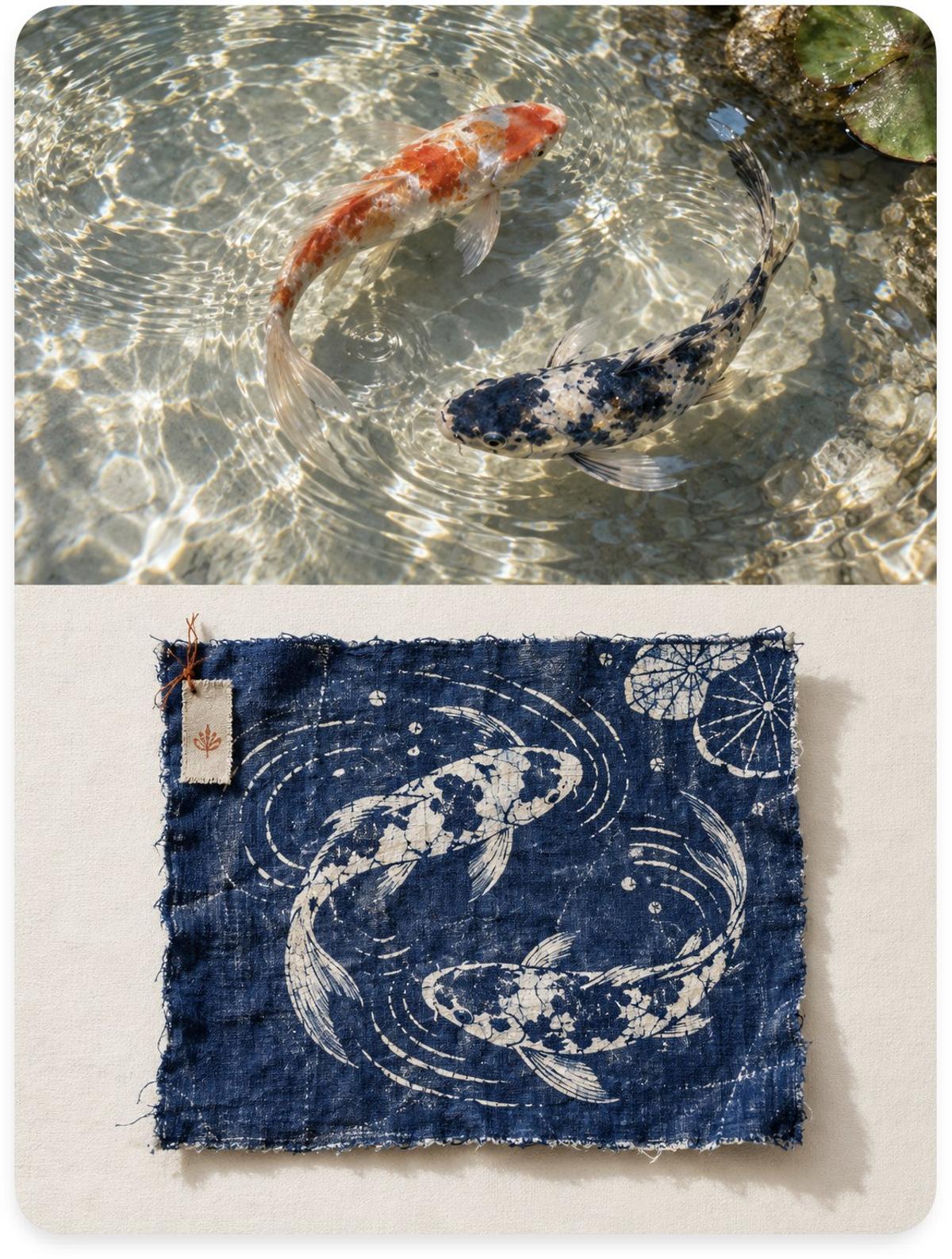
Photo and handmade indigo batik textile posters
0
0
0
0
Prompt
Prompt (English)
Please turn each photo I upload into its own independent, premium design poster. Do not combine multiple photos; output each photo separately. Use an overall 3:4 vertical composition, with the upper and lower areas strictly equal in height, each occupying 50% of the image.

Keep the original photo in the upper half, preserving the subject's identity, structure, pose, realistic texture, natural light and shadow, and original color atmosphere. Apply only subtle, refined color grading for the feel of an art magazine or exhibition image. To fit the frame, the environment may be extended naturally, but the subject must not be stretched, distorted, or altered.

In the lower half, extract the photo's most recognizable **subject, silhouette, structure, pose, and narrative relationships**, and reconstruct them as a piece of **handmade indigo batik cloth / indigo batik textile**. Render the subject in white lines and reserved white areas drawn with a wax knife, with simplified forms and a slightly naive, folk-art character. Locally, add simple patterns evolved from elements in the original photo (such as water ripples, leaves, dots, or geometric key-fret patterns), but the patterns must serve the subject rather than pile up as decoration.

The most moving feature of batik is its **crackle**: the wax layer cracks naturally during dyeing, allowing indigo to seep into the fissures and form fine, irregular blue textures. Preserve this crackle in the subject's white areas, making every part unique, like a chance creation by time and handwork together.

Emphasize authentic fabric: the warp and weft of handwoven cotton-linen cloth, uneven indigo washes, layers produced by repeated dye baths, frayed fabric edges, and slight creases. Lay the cloth flat, curl its edges slightly, or secure it with a small safety pin or wooden clip, like a collected handmade fabric sample. Avoid a printed-pattern appearance, flat digital fills, and perfect symmetry.

Build the composition around **one small piece of cloth and abundant negative space**. The cloth may be square, long and narrow, or irregularly cut, occupying only about 35%–45% of the lower half. It may sit off-center, tilt slightly, or extend partly out of frame. Place it on a clean warm-white, beige-gray, or pale linen-colored background, retaining soft natural shadows.

Use a monochromatic system of indigo, deep blue, mist blue, and cloth white. Extract one warmest color from the photo above and use it only as a small thread knot, a short seam, or a little fabric label, creating a very limited color echo.

Introduce text sparingly, like a fabric label sewn into a corner of the cloth, a handwritten hangtag, or a small stamp, recording a place name, a word, or a number, small and restrained, with no restriction on language.

The overall image should have a warm, handmade visual character combining **indigo batik, crackle, handwoven fabric texture, folk-art simplification, and abundant negative space**. The core principle: do not print the photo onto cloth; let a pair of hands dye the things in the photograph anew. Avoid digital textile printing, all-over patterns, cheap ethnic styling, excessive symmetry, a 3D feel, and formulaic posters.
Prompt (Chinese)
请将我上传的每一张照片分别制作成一张独立的高级设计海报,不多图拼接,每张照片单独输出。整体采用 3:4 竖版构图,上下两个区域高度严格 1:1,各占画面 50%。

上半部分保留原始照片,保持主体身份、结构、姿态、真实质感、自然光影与原有色彩氛围,仅进行轻微高级调色,使其具有艺术杂志与展览图像质感。为适配画幅,可自然扩展环境背景,但不得拉伸、扭曲或改变主体。

下半部分提取照片中最具识别性的**主体、轮廓、结构、姿态与叙事关系**,重构为一方**手工靛蓝蜡染布片 / indigo batik textile**。主体以蜡刀勾画的白色线条和留白块面呈现,造型概括、略带稚拙与民艺气质,可局部加入由原图元素演化出的简洁纹样(如水纹、叶纹、点纹、几何回纹),但纹样必须服务于主体,而不是装饰堆砌。

蜡染最动人的是**冰裂纹**:蜡层在染色时自然开裂,靛蓝渗入裂缝,形成细密的不规则蓝色纹理。请在主体的白色区域中保留这种冰裂纹,使每一处都独一无二,像时间与手工共同完成的偶然。

材质强调真实织物:手织棉麻布的经纬纹理、靛蓝深浅不均的晕染、多次浸染形成的层次、布边毛须与轻微褶皱。布片可以被平放、轻微卷边,或用一枚小别针、木夹固定,像一件被收藏的手工样布。避免印刷图案感、数码平涂和完美对称。

构图以**一方小布片 + 大面积留白**为核心。布片可以是方形、长条或不规则剪裁,只占下半部分约35%–45%,可偏心、轻微倾斜或局部出画,置于暖白、米灰或浅亚麻色的纯净背景上,保留柔和的自然投影。

色彩以靛蓝、深蓝、雾蓝与布白构成单色系统;从上方照片中提取一种最温暖的颜色,只以一枚小线结、一段缝线或一张小布标的方式出现,作为极少量呼应。

文字少量介入,像缝在布片角落的布标、一张手写吊牌或一枚小印章,记录一个地名、一个词或一个编号,细小克制,不限制语种。

整体呈现**靛蓝蜡染、冰裂纹、手织布纹、民艺概括与大量留白**共同构成的温暖手作视觉。核心原则是:不是把照片印到布上,而是让照片里的东西被一双手重新染出来。避免数码印花、满版纹样、廉价民族风、过度对称、3D感和模板化海报。
Parameters
3:4
○○○○○
—
—
—
Comments
to join the conversation