Coastal Photography and Twig Drawings in Wet Sand
0
0
0
0
Prompt
Original · 中文
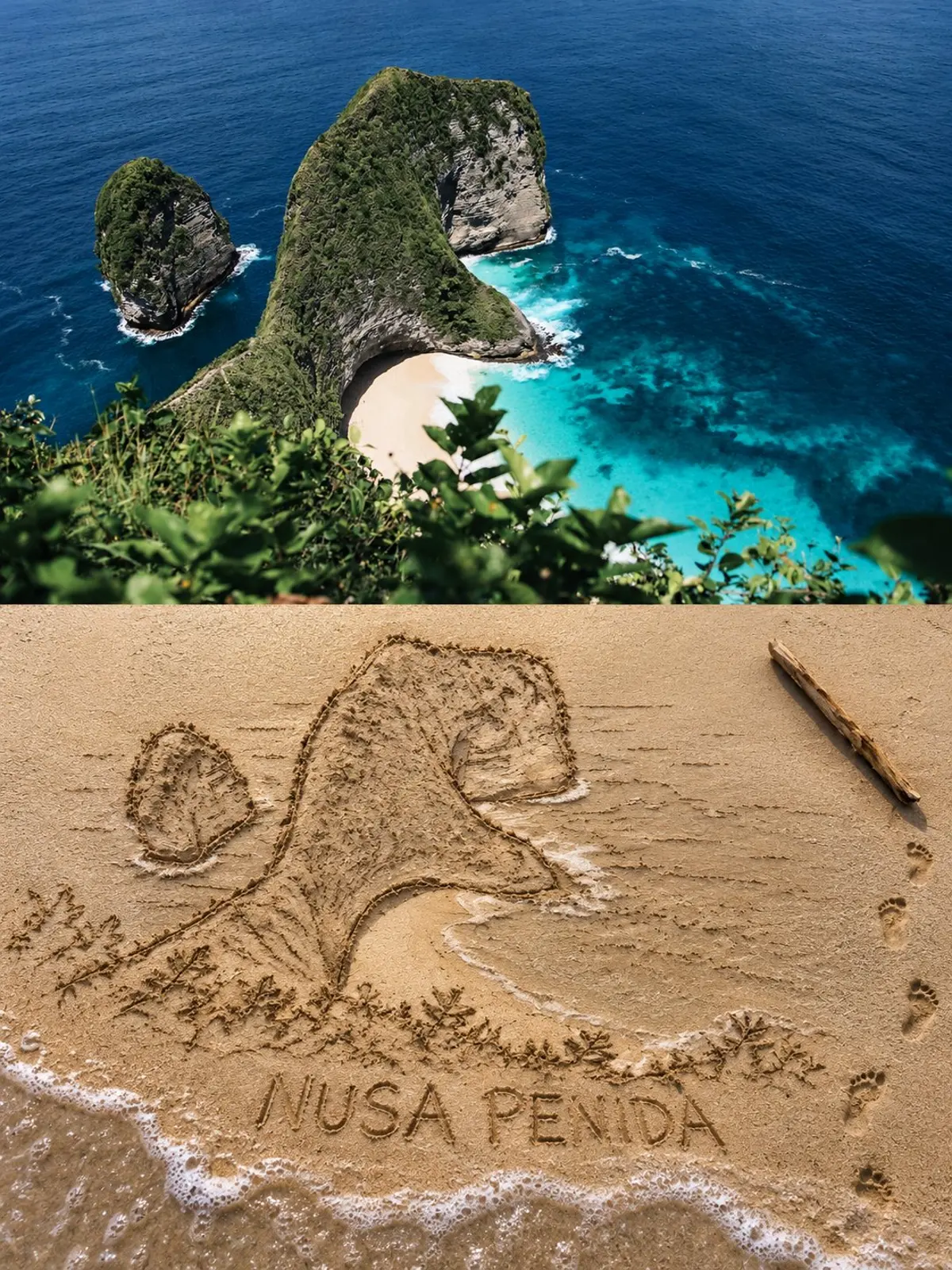
请将我上传的每一张照片分别制作成一张独立的高级设计海报,不多图拼接,每张照片单独输出。整体采用3:4竖版构图,上下两个区域高度严格1:1,各占画面50%。

上半部分保留原始照片,保持主体身份、结构、姿态、真实质感、自然光影和原有色彩氛围,仅进行轻微高级调色,使其具有艺术杂志、独立出版物与展览图像质感。为适配画幅,可自然扩展环境背景,但不得拉伸、扭曲或改变主体。上半部分只放上传的照片本身,沿用原有取景,不添加任何文字、边框或图形。

下半部分提取照片中最具识别性的场景、构图与景物位置,重构为一幅画在湿沙滩上的画:用树枝在平整的湿沙上划出整幅景,景物的位置、大小与照片一一对应,只有粗粗的凹槽线条;沙上有几处脚印和被浪冲淡的边缘。俯拍,沙滩占满下半部分。不要写实,不画细节,只用划出的线和被压平的面表达。

构图遵循“一片沙、一幅画”:画占下半部分约四分之三,居中;主体用深而连续的粗线勾出,次要的景物用浅而短的线;景物的上下左右位置照着原照片;画的下方有一道弯曲的浪线,浪线的前沿把沙面冲出一圈细细的泡沫和水痕;画旁有一排小小的脚印,通向画面外;一根树枝斜放在画的一角。

配色只用沙的颜色:湿沙的深褐、干沙的浅米、浪的淡蓝灰泡沫;除此之外不使用其他颜色;线条的深浅靠沙的湿度。

材质是真实的沙:沙粒清晰,划出的凹槽有侧光形成的阴影,边缘有细沙滑落,浪线处有薄薄的水膜和泡沫;不要数码平滑,也不要塑料感。

文字只出现在一处:画的下方沙上划出的一行、从照片提炼的地点的全大写英文名,用树枝写的粗线字。除此之外画面中不出现任何文字、字母、数字或标志。

整体呈现真实摄影 × 沙滩树枝画的视觉关系,安静、留白多、克制、有一点童心。避免写实的风景、彩色、多个画、卡通感、商业广告文案和模板感。
Reference translation · English
Please turn each photo I upload into a separate high-end design poster. Do not combine multiple photos; output each photo separately. Use a 3:4 portrait composition, with upper and lower sections strictly equal in height, each occupying 50% of the image.

Keep the original photo in the upper half, preserving the subject’s identity, structure, pose, realistic texture, natural light and shadow, and original color atmosphere. Apply only slight, refined color grading for the feel of an art magazine, independent publication, or exhibition image. Extend the environmental background naturally if necessary to fit the format, but do not stretch, distort, or alter the subject. The upper half contains only the uploaded photo itself, retaining its original framing, with no added text, borders, or graphics.

In the lower half, extract the photo’s most recognizable scene, composition, and positions of its elements, reconstructing them as a drawing on wet beach sand: scratch the entire scene into smooth wet sand with a twig, matching the positions and sizes of the elements individually to the photo, using only thick grooved lines. Include a few footprints and edges faded by waves. Use an overhead view, with sand filling the lower half. Do not draw realistically or include details; express it only through scratched lines and flattened surfaces.

Follow the composition of “one stretch of sand, one drawing”: center the drawing, occupying about three quarters of the lower half. Outline the main subject with deep, continuous, thick lines, and secondary elements with shallow, short lines. Keep the elements’ top, bottom, left, and right positions as in the original photo. Below the drawing is a curved wave line whose leading edge washes a thin ring of foam and water marks across the sand. Beside the drawing, a row of small footprints leads out of the frame; a twig lies diagonally at one corner of the drawing.

Use only sand colors: dark brown wet sand, pale beige dry sand, and pale blue-gray wave foam. Use no other colors; variations in line darkness depend on the sand’s moisture.

The material is real sand: clearly visible grains, shadows in the scratched grooves formed by side lighting, fine sand slipping from the edges, and a thin film of water and foam at the wave line. Avoid digital smoothness and a plastic look.

Text appears in only one place: a single line scratched into the sand below the drawing, spelling the location name distilled from the photo in uppercase English, in thick lettering written with a twig. No other text, letters, numbers, or logos may appear anywhere in the image.

The overall image presents the visual relationship of real photography × a twig drawing on a beach: quiet, with abundant negative space, restrained, and a little childlike. Avoid realistic scenery, colorfulness, multiple drawings, a cartoon look, commercial advertising copy, and a template feel.
Parameters
3:4
○○○○○
—
—
—
Comments
to join the conversation